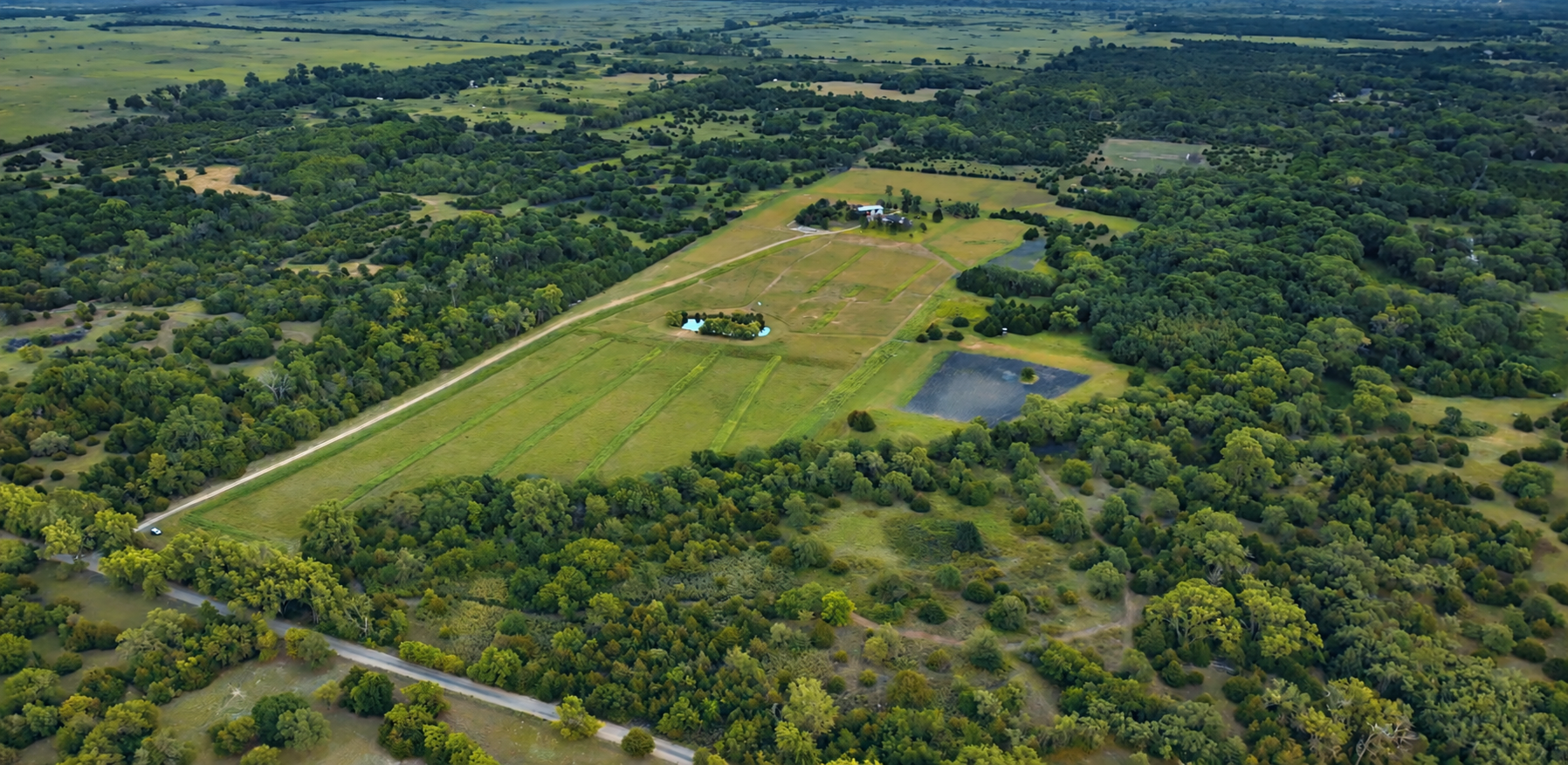
Rice County farmland continued to attract buyers in 2025 and 2026, but the market did not assign one price to every acre. Recent sales show a clear spread between non-irrigated cropland, irrigated farms, pasture, and mixed-use tracts. Soil quality, water, tillable percentage, access, field efficiency, minerals, improvements, and competitive location all influenced the final result.
The clearest current benchmark comes from K-State's analysis of 2025 open-market transactions. Rice County qualified sales averaged $3,081 per acre for non-irrigated cropland, $8,095 for irrigated cropland, and $2,231 for pasture and hay ground. Those numbers describe groups of past sales — not a guaranteed value for an individual farm. The reported ranges were wide enough to make a property-specific review essential.
Rice County Value Snapshot
| Land type | 2025 minimum | 2025 maximum | 2025 average |
|---|---|---|---|
| Non-irrigated cropland | $1,861 | $4,355 | $3,081 |
| Irrigated cropland | $6,713 | $9,775 | $8,095 |
| Pasture and hay | $1,976 | $2,700 | $2,231 |
Source: K-State Research and Extension, Kansas Agricultural Land Values and Trends 2025. Prices are per parcel acre. K-State reports county figures only when more than three qualifying parcels in the category sold; stated minimums and maximums were not independently verified and may reflect special circumstances.
What the Latest Data Says
Rice County sits in K-State's Central Region, where most cropland is non-irrigated and wheat remains the leading cash crop, with meaningful corn, soybean, sorghum, alfalfa, and livestock production. Across the Central Region, non-irrigated cropland averaged $3,091 per acre in 2025, down 6.6% from 2024. Pasture and hay averaged $2,331, down 1.9%. Rice County's dryland average was almost identical to the regional figure, while its pasture average was modestly lower.
K-State analyzed 65 Rice County sales representing 6,943 acres that met its open-market criteria. Total county agricultural acreage sold was reported at 13,464 acres, or about 3% of the county's agricultural acres. That placed Rice among the Central Region counties with relatively active turnover during the year.
The irrigated category stands apart. Rice County's reported $8,095 average was based on a much smaller pool of irrigated sales than the dryland market. An irrigation premium is reasonable only when the water right, well performance, equipment, energy cost, soils, and remaining useful life of the system support it. A county average cannot answer those questions for a particular farm.
Recent Rice County Sale Examples
Individual auction results add useful context, provided the property details are kept attached to the price.
- March 2025: Ten Rice County tracts totaling about 1,174 acres sold for roughly $4.26 million — an overall average of $3,629 per acre. The offering included about 1,112 tillable acres, primarily Class 2 soils, and an average NCCPI of 64.7. Individual tracts differed, and the top reported tract reached $4,700 per acre.
- November 2025: Four tracts spanning Rice and Ellsworth Counties totaled 480 acres and sold for about $1.42 million, or $2,965 per acre. Two quarter-sections were primarily row crop; another tract combined cropland, grass, and creek frontage; the fourth was grass.
These sales are not interchangeable comparables. One involved a large, highly tillable multi-tract Rice County offering; the other mixed row crop, grass, and creek acreage across two counties. Their value is in showing the current market's range and the importance of tract-level analysis — not in producing a universal price per acre.
Non-Irrigated Cropland
For most Rice County dryland farms, value begins with productive soils and the amount of land that can be farmed efficiently. Buyers study soil maps, NCCPI, slope, erosion exposure, drainage, terraces, waterways, field shape, and yield history. A nearly level quarter with strong soils and minimal waste acreage usually competes differently from a tract divided by waterways, timber, roads, or an old farmstead.
The 2025 county range of $1,861 to $4,355 per acre illustrates that difference. Ground near the upper end should have a defensible reason for the premium: better productivity, a high tillable percentage, excellent access, competitive neighboring operators, development or homesite potential, minerals, or another scarce feature. A below-average sale may reflect weaker soils, unusual terms, access limitations, deferred conservation work, or a mixed-use parcel classified by its dominant acreage.
Irrigated Cropland
Irrigated Rice County ground produced the highest reported category average, but irrigation must be evaluated as a complete operating system. Buyers should verify the water right and authorized use, historical pumping, well capacity, energy source, equipment age, repair history, and any transfer or regulatory issue. A pivot that is ready for the next crop adds different utility than a system facing major well or equipment expense.
The 2025 range of $6,713 to $9,775 per acre should therefore be treated as evidence of what certain qualifying irrigated parcels sold for — not as an automatic price range for every irrigated acre. Limited sales also make year-to-year averages more sensitive to the quality of the farms that happened to trade.
Pasture, Hay, and Mixed-Use Ground
Rice County pasture and hay sales averaged $2,231 per acre in 2025, but grazing value depends on water, fence condition, forage, brush pressure, carrying capacity, access, and how well the tract fits nearby livestock operations. Smaller tracts may also draw homesite or recreational demand that is not explained by grazing income.
The Arkansas River, Cow Creek, Little River, timbered draws, ponds, and crop-to-cover transitions can add hunting and recreational appeal to some properties. That potential is property-specific. Habitat quality, flood exposure, privacy, legal access, neighboring land use, minerals, and lease income all matter. Buyers will not pay the same premium for every acre of timber or every creek crossing.
What Is Supporting Demand in 2026
- Local operator demand: Neighboring farmers may value operational fit, reduced travel, and expansion more than a distant investor does.
- Scarcity of quality offerings: Farms with strong soils, efficient fields, and clean documentation are difficult to replace when few comparable tracts are available.
- Income and inflation protection: Land remains attractive to buyers seeking a tangible, income-producing long-term asset, although cash return varies by price and lease terms.
- Irrigation and water: Dependable systems can command substantial premiums, while uncertainty about capacity or cost creates a discount.
- Recreation and rural lifestyle: Hunting, water, timber, privacy, and homesite potential can broaden the buyer pool for selected tracts.
Factors That Can Hold Value Back
- A low tillable percentage or inefficient field shape
- Unresolved access, boundary, title, mineral, or easement questions
- An unclear verbal lease or possession date
- Poor fences, failing terraces, brush, drainage problems, or worn irrigation equipment
- Incomplete FSA records, soil information, well records, or operating history
- Marketing that relies on generic acreage and one price-per-acre comparison
Cash Rent and Income Value
Rental income helps investors and operators connect sale price with expected return. The most recent county rent information should be checked for the property's land type and lease structure, but an average rent is only a benchmark. Actual rent depends on soil productivity, yield expectations, irrigation responsibility, input sharing, improvements, field size, access, and competition among tenants.
A buyer may capitalize expected net income to estimate investment value, then compare that result with recent sales. At higher sale prices, the cash yield narrows unless rent or operating returns rise. This does not prevent a strong sale, because buyers may also value expansion, long-term appreciation, tax planning, minerals, recreation, or family ownership goals.
Tax Value Is Not Market Value
Kansas agricultural land is valued for property-tax purposes according to agricultural use and productive potential rather than open-market sale value. Rice County's tax appraisal should not be used as the expected listing price or auction result. Market value requires analysis of current comparable sales, income, property quality, rights, and buyer demand.
Outlook for Rice County Sellers
The 2026 Rice County market appears selective rather than weak. Buyers are still willing to compete for useful farms, but they are examining income, water, soils, improvements, and sale terms carefully. Strong properties with a clear reason to own them should separate themselves from the averages. Mixed or complicated farms can still sell well when the marketing explains each component and gives buyers enough information to bid confidently.
For sellers, the practical lesson is to prepare before setting a price or auction date. Resolve ownership and access questions, document leases and possession, gather FSA and soil records, verify irrigation information, identify what mineral interests transfer, and compare the farm with genuinely similar sales. Then choose the sale method based on the likely buyer pool, net proceeds, timing, and certainty.
Frequently Asked Questions
What is Rice County dryland worth per acre?
K-State's qualifying 2025 Rice County non-irrigated sales averaged $3,081 per acre and ranged from $1,861 to $4,355. A current farm may fall above or below that range based on soils, tillable percentage, location, access, improvements, minerals, lease terms, and competition.
What is irrigated Rice County farmland worth?
K-State reported a 2025 average of $8,095 per acre, with qualifying sales from $6,713 to $9,775. Because the sample was limited and irrigation systems differ greatly, the water right, well, equipment, energy costs, and soils must be reviewed before applying the benchmark.
How much is Rice County pasture worth?
K-State's 2025 qualifying pasture and hay sales averaged $2,231 per acre, ranging from $1,976 to $2,700. Water, fences, forage, carrying capacity, access, hunting features, and homesite potential can materially change value.
Does NCCPI determine the sale price?
No. NCCPI is a useful soil-productivity indicator, but buyers also consider actual yields, drainage, slope, conservation work, tillable percentage, local demand, access, water, and sale terms.
Is an auction or traditional listing better?
An auction can work well when multiple local operators, investors, or recreational buyers are likely to compete and the seller wants a defined schedule. A traditional listing can fit a highly specialized property that needs more negotiation time. The better choice depends on expected net proceeds, timing, and risk.
Should I use the county tax value to price my farm?
No. Kansas agricultural tax valuation is based on use and productivity, not an estimate of open-market sale price. Use current comparable sales and a property-specific market analysis.
What Is Your Rice County Farm Worth?
County averages are a starting point. A useful value range must account for the specific farm's soils, tillable acres, water, lease income, access, improvements, minerals, recreation, location, and likely buyers. I can help Rice County landowners study comparable sales, identify the strongest buyer groups, and compare auction and traditional-listing strategies.
Alex Miller | L2 Realty Inc. & Auction | 316-313-4759
Sources: K-State Research and Extension, Kansas Agricultural Land Values and Trends 2025; USDA NASS, Land Values 2026 Summary; USDA NASS, Kansas county cash-rent data; Kansas Department of Revenue, Agricultural Use Valuation; DTN Progressive Farmer, reported Rice County and Rice/Ellsworth County auction results. Market data is current through September 2026 where available. Reported sale results may be rounded and should be verified before use in an appraisal or transaction. This article provides general market information and is not a certified appraisal, legal opinion, tax advice, water-right opinion, survey, or guarantee of sale price.